No questions here on Civilizations, Historical flags, Turning points, Religion — nothing recorded for Democratic Republic of the Congo.
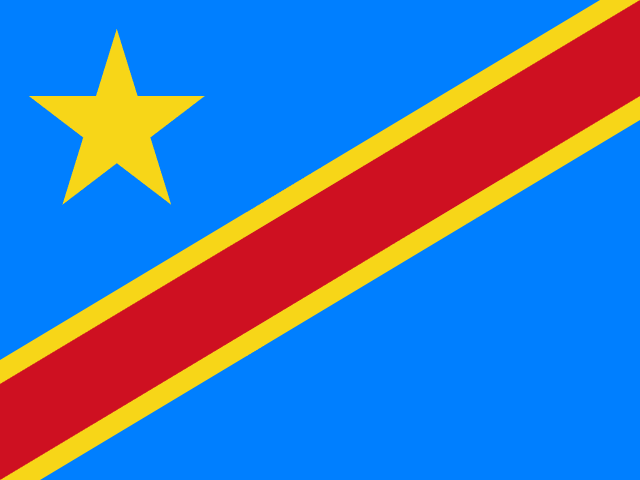
Democratic Republic of the Congo
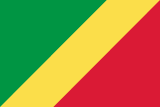
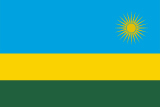
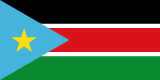
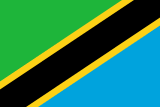
The Democratic Republic of the Congo (DRC), also known as the DR Congo, Congo-Kinshasa, or simply the Congo, and formerly named Zaire, is a country in Central Africa. By land area, it is the second-largest country in Africa and the eleventh-largest in the world. With a population of about 124 million people, the Democratic Republic of the Congo is the fourth-most populous country in Africa and the most populous Francophone country in the world. French is the official and most widely spoken language. There are over 200 indigenous languages, of which Lingala is the most widely spoken. The capital, largest city, and economic center is Kinshasa. The DRC is bordered by the Republic of the Congo, the Cabinda exclave of Angola, and the South Atlantic Ocean to the west; the Central African Republic and South Sudan to the north; Uganda, Rwanda, Burundi, and Tanzania to the east; and Zambia and Angola to the south. Centered on the Congo Basin, most of the DRC's terrain is covered by dense rainforests and is crossed by many rivers. The east and southeast are mountainous.
Read Democratic Republic of the Congo on Wikipedia · Recent news from Democratic Republic of the Congo
You have not been asked about Democratic Republic of the Congo yet.
WHAT PEOPLE ARE CALLED
Congolese
These are English demonyms for people from Democratic Republic of the Congo. A demonym describes a connection to a place; it does not mean everyone shares an ethnicity, language or religion.
Demonym source: mledoze/countries · Download the attributed dataset (ODbL)SAME LAND, DIFFERENT WORLDS
Civilizations, flags & standards
Modern borders are a starting point for exploring the past. These cultures and states occupied some of the same land; they were not the same country. Dates describe each civilization or state as a whole, not continuous rule over every place listed.
A sourced civilization and flag trail has not been added for Democratic Republic of the Congo yet. No ancient flag is inferred from the modern one.
Explore the history of this land · Browse civilizations & empires
Turning points
A curated timeline is not available yet. Explore the country's history and the historical figures below.
Read the historical overview →Religion: state & society
An official religion is a legal status. The largest religious group is a population measure. Neither describes every person's beliefs.
Official status and a dated affiliation breakdown have not been checked for this country. The atlas's religion tags are not a population ranking.
BEYOND THE MAP
Democratic Republic of the Congo in the study desk
Places and things the general-knowledge library connects to Democratic Republic of the Congo. Open one to follow its connections, then practise them with typed recall.
Geography 4
Food & drink 1
Follow Democratic Republic of the Congo into the rabbit holes →
Choose your next rabbit hole
Where it is
Languages
Share of the population that speaks each. Click one to see every country that speaks it.
What it sells, and to whom
Every line is a thread: click a commodity or a partner to see who else trades in it.
Trades with
Industries
Farms and fisheries
- cassava
- plantains
- sugarcane
- maize
- oil palm fruit
- rice
Largest cities
| Kinshasa capital | 16,000,000 |
| Lubumbashi | 2,221,925 |
| Mbuji-Mayi | 2,101,332 |
| Kananga | 1,247,168 |
| Kisangani | 1,181,788 |
Wars and conflicts
Conflicts this country is attached to. Click one to see the others. Each says what kind of claim it is: a principal belligerent is hand-checked against the modern state that succeeded the power that fought, while a recorded participant comes from the bulk import, which does not separate combat from funding, basing, occupation or reconstruction. Neither list is complete, so a country missing from a war may still have taken part — which is why the quiz no longer asks who fought in what.
Money, belief and alliances
Money
Belongs to
Climate and geography
tropical; hot and humid in equatorial river basin; cooler and drier in southern highlands; cooler and wetter in eastern highlands; north of Equator - wet season (April to October), dry season (December to February); south of Equator - wet season (November to March), dry season (April to October)
Climate zone
Highest point
Landmarks and landscapes
Southern hemisphere.
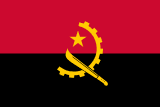
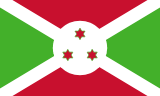
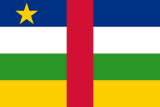
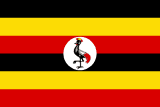
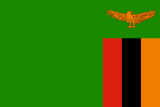
Land borders (9)
In charge right now

Figures from its history


Leaders before them


Corrected in an AI-assisted review of the imported data (2026-09-22), not yet checked against a named source: languages, leaders.