The geography wing
Practice India

No questions here on Historical flags — nothing recorded for India.

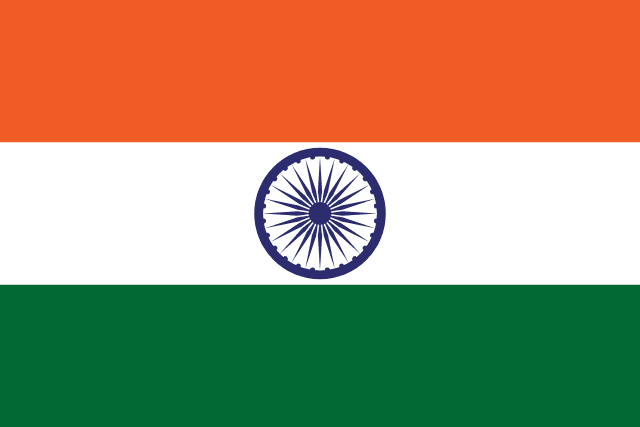
Flag of India

India

IN / IND   22.8°, 83.0°

Read India on Wikipedia  ·  Recent news from India

You have not been asked about India yet.

People are called
Indian
Driving side
Left
Calling code
+91
Capital
New Delhi
Population
1,450,000,000
Area
3,287,263 km2
Climate
Tropical
Government
Federal parliamentary republic
Currency
Indian rupee
Languages
Hindi 43.6%, Bengali 8%, Marathi 6.9%
Sells
refined petroleum, packaged medicine, diamonds, broadcasting equipment
Sells to
USA 19%, UAE 7%, China 4%
Land borders
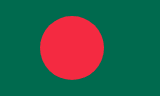
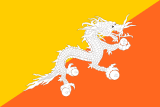
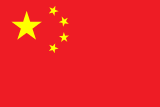
6: Bangladesh, Bhutan, People's Republic of China, Myanmar ...
Drives on the
left
Calling code
+91
Founded
1947
Hemisphere
Northern

WHAT PEOPLE ARE CALLED

Indian

These are English demonyms for people from India. A demonym describes a connection to a place; it does not mean everyone shares an ethnicity, language or religion.

Demonym source: mledoze/countries · Download the attributed dataset (ODbL)

Practice demonyms around the world →

SAME LAND, DIFFERENT WORLDS

Civilizations, flags & standards

Practice this section around the world →

Modern borders are a starting point for exploring the past. These cultures and states occupied some of the same land; they were not the same country. Dates describe each civilization or state as a whole, not continuous rule over every place listed.

No known flag

Indus Valley civilization

c. 3300–1300 BCE; urban peak c. 2600–1900 BCE

Settlements in present-day Pakistan and northwestern India, rather than all of either country.

Seals preserve animal motifs and an undeciphered script. They are not evidence of a national flag.

Explore the evidence & illustrations →

Follow it across today's borders

Explore the history of this land · Browse civilizations & empires

Turning points

Practice this section around the world →

A few starting points, not a complete history.

  1. c. 2600–1900 BCE

    The Indus civilization's major urban centers flourish across parts of today's India and Pakistan.

  2. 1947

    Independence and Partition create India and Pakistan amid mass displacement and violence.

  3. 1950

    India's Constitution takes effect and the country becomes a republic.

Read the historical overview →

Religion: state & society

Practice this section → 7 questions

An official religion is a legal status. The largest religious group is a population measure. Neither describes every person's beliefs.

Official status

No state religion; constitutionally secular republic.

Status reference

Religious affiliation

Largest religious group: Hinduism

2011 census
Hinduism79.8%
Islam14.2%
Christianity2.3%
Sikhism1.7%

Historical census snapshot, not a claim about today's percentages. Selected categories are shown.

Affiliation source & methodology

BEYOND THE MAP

India in the study desk

Places and things the general-knowledge library connects to India. Open one to follow its connections, then practise them with typed recall.

Geography 16

Food & drink 13

Follow India into the rabbit holes →

Choose your next rabbit hole

Where it is

Languages

Share of the population that speaks each. Click one to see every country that speaks it.

Hindiofficial
43.6%
8.0%
6.9%
6.7%
5.7%

Largest cities

Mumbai 12,691,836
Delhi 11,034,555
Bengaluru 8,495,492
Hyderabad 6,993,262
Ahmedabad 6,357,693

Wars and conflicts

Conflicts this country is attached to. Click one to see the others. Each says what kind of claim it is: a principal belligerent is hand-checked against the modern state that succeeded the power that fought, while a recorded participant comes from the bulk import, which does not separate combat from funding, basing, occupation or reconstruction. Neither list is complete, so a country missing from a war may still have taken part — which is why the quiz no longer asks who fought in what.

Climate and geography

varies from tropical monsoon in south to temperate in north

Climate zone

Highest point

Northern hemisphere.

Figures from its history

Mahatma Gandhi
Mahatma Gandhi Led the independence movement Mohandas Karamchand Gandhi was an Indian lawyer, anti-colonial nationalist, and political ethicist who employed nonviolent resistance to lead the successful campaign for India's independence from British rule, and to later inspire movements for civil rights...
Jawaharlal Nehru
Jawaharlal Nehru First prime minister Jawaharlal Nehru was an Indian lawyer, anti-colonial nationalist, secular humanist, social democrat, and statesman who was a central figure in India during the middle of the 20th century.
B. R. Ambedkar
B. R. Ambedkar Architect of the constitution Bhimrao Ramji Ambedkar was an Indian jurist, economist, social reformer and politician who chaired the committee that drafted the Constitution of India based on the debates of the Constituent Assembly of India and the first draft of Sir Benegal Narsing Rau.
Indira Gandhi
Indira Gandhi Prime minister, assassinated in 1984 Indira Priyadarshini Gandhi was an Indian stateswoman who twice served as the Prime Minister of India from 1966 to 1977 and again from 1980 until her assassination in 1984.
Narendra Modi
Narendra Modi Prime minister since 2014 Narendra Damodardas Modi is an Indian politician who has served as the prime minister of India since 26 May 2014.

Corrected in an AI-assisted review of the imported data (2026-09-22), not yet checked against a named source: famous, highest point, leaders, past leaders, population, wars.