Official status
No established state religion.
Status referenceNo questions here on Civilizations, Historical flags — nothing recorded for South Africa.
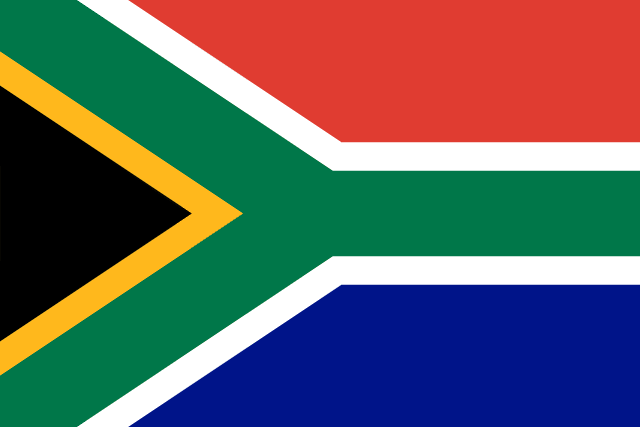
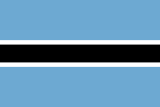
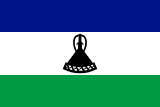
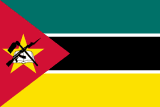
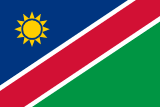
South Africa, officially the Republic of South Africa (RSA), is the southernmost country in Africa. The country consists of nine provinces, and is bounded to the south by 2,798 kilometres of coastline that stretches along the South Atlantic and Indian Ocean; to the north by the neighbouring countries of Namibia, Botswana, and Zimbabwe; and to the east and northeast by Mozambique and Eswatini. South Africa also encloses Lesotho. Covering an area of 1,221,037 square kilometres, the country has a population of over 63 million people, making it the sixth-most populated country in Africa, and 24th-most in the world.
Read South Africa on Wikipedia · Recent news from South Africa
You have not been asked about South Africa yet.
WHAT PEOPLE ARE CALLED
These are English demonyms for people from South Africa. A demonym describes a connection to a place; it does not mean everyone shares an ethnicity, language or religion.
Demonym source: mledoze/countries · Download the attributed dataset (ODbL)SAME LAND, DIFFERENT WORLDS
Modern borders are a starting point for exploring the past. These cultures and states occupied some of the same land; they were not the same country. Dates describe each civilization or state as a whole, not continuous rule over every place listed.
A sourced civilization and flag trail has not been added for South Africa yet. No ancient flag is inferred from the modern one.
Explore the history of this land · Browse civilizations & empires
Practice this section around the world →
A few starting points, not a complete history.
The Union of South Africa is formed under white minority rule.
The National Party takes power and expands apartheid into a systematic state policy.
The first democratic national election with universal adult suffrage is held.
Practice this section → 5 questions
An official religion is a legal status. The largest religious group is a population measure. Neither describes every person's beliefs.
No established state religion.
Status referenceLargest religious group: Christianity
2022 censusSelected self-reported affiliation/belief categories.
Affiliation source & methodologyBEYOND THE MAP
Places and things the general-knowledge library connects to South Africa. Open one to follow its connections, then practise them with typed recall.
Share of the population that speaks each. Click one to see every country that speaks it.
Every line is a thread: click a commodity or a partner to see who else trades in it.
| Johannesburg | 9,418,183 |
| Cape Town | 4,772,846 |
| Durban | 3,338,026 |
| Pretoria capital | 2,112,693 |
| Gqeberha | 1,190,000 |
Conflicts this country is attached to. Click one to see the others. Each says what kind of claim it is: a principal belligerent is hand-checked against the modern state that succeeded the power that fought, while a recorded participant comes from the bulk import, which does not separate combat from funding, basing, occupation or reconstruction. Neither list is complete, so a country missing from a war may still have taken part — which is why the quiz no longer asks who fought in what.
Parliamentary republic.
mostly semiarid; subtropical along east coast; sunny days, cool nights
Southern hemisphere.


Corrected in an AI-assisted review of the imported data (2026-09-22), not yet checked against a named source: cities, languages.