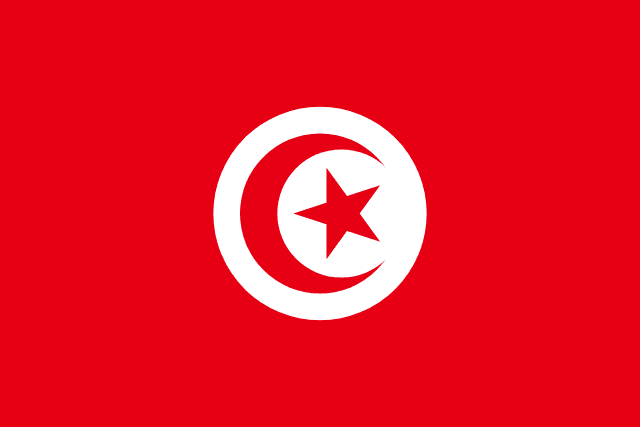
Tunisia
Tunisia, officially the Republic of Tunisia, is a country in the Maghreb region of North Africa. It is bordered by Algeria to the west and southwest, Libya to the southeast, and the Mediterranean Sea to the north and east. Tunisia also shares maritime borders with Italy through the islands of Sicily and Sardinia to the north and Malta to the east. It features the archaeological sites of Carthage dating back to the 9th century BC, as well as the Great Mosque of Kairouan. Known for its ancient architecture, souks, and blue coasts, it covers 163,610 km2 (63,170 sq mi), and has a population of 12.1 million. It contains the eastern end of the Atlas Mountains and the northern reaches of the Sahara desert; much of its remaining territory is arable land. Its 1,300 km (810 mi) of coastline includes the African conjunction of the western and eastern parts of the Mediterranean Basin. Tunisia is home to Africa's northernmost point, Cape Angela. Located on the northeastern coast, Tunis is the capital of the country, which is itself named after Tunis. The official language of Tunisia is Arabic. The vast majority of Tunisia's population is Arab and Muslim. Vernacular Tunisian Arabic is the most spoken language, and French serves as an administrative and educational language in some contexts, but has no official status.
Read Tunisia on Wikipedia · Recent news from Tunisia
You have not been asked about Tunisia yet.
Where it is
Languages
Share of the population that speaks each. Click one to see every country that speaks it.
What it sells, and to whom
Every line is a thread: click a commodity or a partner to see who else trades in it.
Trades with
Farms and fisheries
- milk
- tomatoes
- olives
- onions
- chillies/peppers
- watermelons
Wars and conflicts
Click one to see everyone else who fought in it.
Money, belief and alliances
Money
Belongs to
Climate and geography
temperate in north with mild, rainy winters and hot, dry summers; desert in south
Climate zone
Highest point
Northern hemisphere.


In charge right now


Figures from its history


