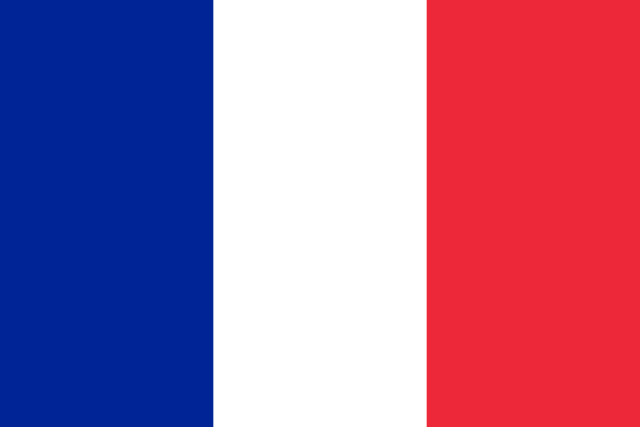
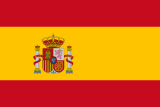
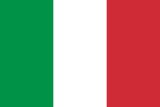
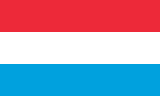
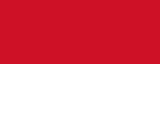
France, officially the French Republic, is a country primarily located in Western Europe. Its overseas regions and territories include French Guiana in South America, Saint Pierre and Miquelon in the North Atlantic, the French West Indies, and many islands in Oceania and the Indian Ocean. Metropolitan France shares borders with Belgium and Luxembourg to the north; Germany to the northeast; Switzerland to the east; Italy and Monaco to the southeast; Andorra and Spain to the south; and a maritime border with the United Kingdom to the northwest. Its metropolitan area extends from the Rhine to the Atlantic Ocean and from the Mediterranean Sea to the English Channel and the North Sea. Its 18 integral regions—five of which are overseas—span a combined area of 632,702 km2 (244,288 sq mi), with a total population estimated at over 69.1 million in 2026. Its capital, largest city and main cultural and economic centre is Paris, with a metropolitan population of over 13 million.
These are English demonyms for people from France. A demonym describes a connection to a place; it does not mean everyone shares an ethnicity, language or religion.
Modern borders are a starting point for exploring the past. These cultures and states occupied some of the same land; they were not the same country. Dates describe each civilization or state as a whole, not continuous rule over every place listed.
Military standard
Roman Empire
27 BCE–476 CE in the West; eastern empire continued to 1453
Includes only parts of some modern states: much of Britain south of Scotland, and areas west of the Rhine or south of the Danube in Germany.
The aquila was a legion's eagle standard, not a national flag. No original legionary eagle is known to survive.
Catholicism has a major historical role. Surveys of identity, belief and practice measure different things; no percentage is inferred from the imported religion list.
Conflicts this country is attached to. Click one to see the others.
Each says what kind of claim it is: a principal belligerent is
hand-checked against the modern state that succeeded the power that
fought, while a recorded participant comes from the bulk
import, which does not separate combat from funding, basing,
occupation or reconstruction. Neither list is complete, so a country
missing from a war may still have taken part — which is why the
quiz no longer asks who fought in what.
metropolitan France: generally cool winters and mild summers, but mild winters and hot summers along the Mediterranean; occasional strong, cold, dry, north-to-northwesterly wind known as the mistral
NapoleonEmperor, 1804-1815
Napoleon Bonaparte, later known by his regnal name Napoleon I, was Emperor of the French from 18 May 1804 until his first abdication in 1814, with a brief restoration during the Hundred Days in 1815.
Charles de GaulleWartime leader and president
Charles André Joseph Marie de Gaulle was a French general and statesman who led the Free French Forces against Germany during the Nazi era and Vichy France in World War II and chaired the Provisional Government of the French Republic from 1944 to 1946 to...
Joan of ArcSaint and military leader
Joan of Arc is a patron saint of France, honored as a defender of the French nation for her role in the siege of Orléans and her insistence on the coronation of Charles VII of France during the Hundred Years' War.
Marie CurieTwice a Nobel laureate
Maria Salomea Skłodowska Curie, better known as Marie Curie, was a Polish and naturalised-French physicist and chemist.
Most of this page is imported in bulk and carries no source of its
own. These entries were checked by hand against the source named,
and are reapplied after every dataset rebuild so a refetch cannot
quietly put the old value back.
Continents
— Seven-continent model. A country spanning two continents is filed under the one containing its capital; the other is accepted too.
The imported list was unordered and included overseas territory, so its first entry was not the continent the country is in. Source· true as of 2026-09-11 · checked 2026-09-11
Member of european union
— Full member states only, as the organisation itself lists them.
The imported member_of list is out of date for this organisation and is not asked about. Source· true as of 2026-09-11 · checked 2026-09-11
Member of nato
— Full member states only, as the organisation itself lists them.
The imported member_of list is out of date for this organisation and is not asked about. Source· true as of 2026-09-11 · checked 2026-09-11
Corrected in an AI-assisted review of the imported data
(2026-09-22), not yet checked against a named source:
currencies, economy, famous, founded, leaders.