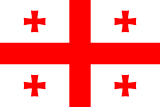
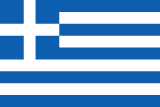
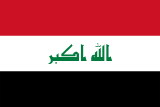
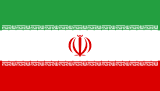
No questions here on Historical flags, Turning points, Religion — nothing recorded for Turkey.
Turkey
TR / TUR 39.0°, 36.0°
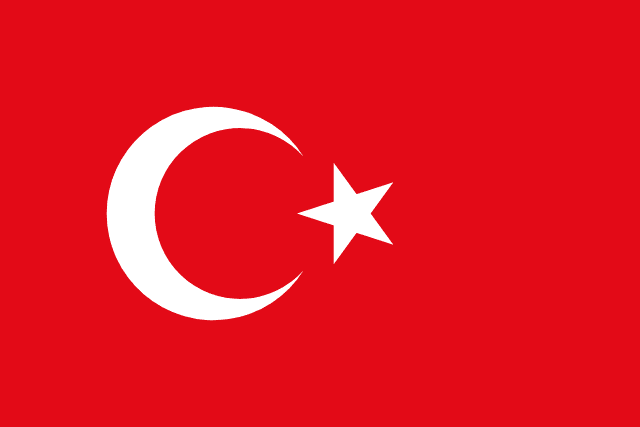
Turkey, officially the Republic of Türkiye, is a country mainly located in Anatolia in West Asia, with a smaller part called East Thrace in Southeast Europe. It borders the Black Sea to the north; Georgia, Armenia, Azerbaijan, and Iran to the east; Iraq, Syria, and the Mediterranean Sea to the south; and the Aegean Sea, Greece, and Bulgaria to the west. Turkey is home to over 86 million people; most are ethnic Turks, while Kurds are the largest ethnic minority. Officially a secular state, Turkey has a Muslim-majority population. Ankara is Turkey's capital and second-largest city. Istanbul is its largest city and economic center. Other major cities include İzmir, Bursa, and Antalya.
These are English demonyms for people from Turkey. A demonym describes a connection to a place; it does not mean everyone shares an ethnicity, language or religion.
Modern borders are a starting point for exploring the past. These cultures and states occupied some of the same land; they were not the same country. Dates describe each civilization or state as a whole, not continuous rule over every place listed.
Reported standard
Achaemenid Empire
c. 550–330 BCE
An empire centered in Iran; parts of these modern countries were held at different times, not for its entire lifespan.
Ancient accounts describe an eagle standard. Modern flag reconstructions should not be mistaken for a surviving national flag.
Conflicts this country is attached to. Click one to see the others.
Each says what kind of claim it is: a principal belligerent is
hand-checked against the modern state that succeeded the power that
fought, while a recorded participant comes from the bulk
import, which does not separate combat from funding, basing,
occupation or reconstruction. Neither list is complete, so a country
missing from a war may still have taken part — which is why the
quiz no longer asks who fought in what.
Mustafa Kemal AtaturkFounder of the republic
Mustafa Kemal Atatürk was a Turkish field marshal and statesperson who was the founder of the Republic of Turkey and served as its first president from 1923 until his death in 1938.
Suleiman the MagnificentOttoman sultan at the empire's height
Suleiman I, commonly known as Suleiman the Magnificent, was the Ottoman sultan from 1520 to 1566.
Mehmed IIConqueror of Constantinople
Mehmed II, commonly known as Mehmed the Conqueror, was the sultan of the Ottoman Empire twice, from August 1444 to September 1446 and again from February 1451 to May 1481.
Orhan PamukNobel laureate novelist
Ferit Orhan Pamuk is a Turkish novelist, screenwriter, academic, and recipient of the 2006 Nobel Prize in Literature.
Most of this page is imported in bulk and carries no source of its
own. These entries were checked by hand against the source named,
and are reapplied after every dataset rebuild so a refetch cannot
quietly put the old value back.
Continents
— Seven-continent model. A country spanning two continents is filed under the one containing its capital; the other is accepted too.
The imported list was unordered and included overseas territory, so its first entry was not the continent the country is in. Source· true as of 2026-09-11 · checked 2026-09-11
Member of nato
— Full member states only, as the organisation itself lists them.
The imported member_of list is out of date for this organisation and is not asked about. Source· true as of 2026-09-11 · checked 2026-09-11
Corrected in an AI-assisted review of the imported data
(2026-09-22), not yet checked against a named source:
calling code, leaders, past leaders.